Loft Conversions in Suffolk – The Complete Guide
Loft Conversions in Suffolk – Planning, Technical Guide & Benefits
Planning, practical considerations and benefits for homeowners in Hadleigh, Sudbury and the surrounding Babergh district.
Need another bedroom, a quiet office or simply more room to live? A loft conversion could provide the space you need without sacrificing your garden or leaving the home you enjoy.
Pro Build East Ltd is based in Hadleigh, working with homeowners in Sudbury, Ipswich and surrounding Suffolk villages. This guide explains what to consider before converting your loft, with local planning guidance focused on properties within Babergh.
Introduction: Why Consider a Loft Conversion?
A loft conversion turns unused roof space into a usable part of your home. It can be a practical alternative to extending outwards or moving, particularly when the location works well but the house feels too small.
The first question is whether your roof space and the floor below can accommodate the conversion. Headroom, structural support and the position of the new stairs all affect what is possible.
Quick answer: Some loft conversions can proceed without a planning application under England’s permitted-development rules. A conversion into living accommodation still requires Building Regulations approval. Check both routes before work starts.
What You’ll Find in This Guide
- Benefits of a loft conversion
- Technical considerations and suitability
- Planning permission in Suffolk
- Building Regulations and other requirements
- Common conversion types and costs
- The conversion process
- Alternatives to a loft conversion
- FAQs and next steps
What Are the Benefits of a Loft Conversion?
1. Increased Living Space
An additional bedroom, home office or playroom can make everyday life easier. A successful design considers how the new room connects with the rest of the house, including stairs, storage and bathroom access.
2. Potential to Add Property Value
A well-designed conversion may increase your home’s value, but there is no guaranteed percentage or return. The outcome depends on the property, local market, quality of work and usefulness of the extra space. If resale value matters, seek a local valuation before setting your budget.
3. An Alternative to Moving
Converting may allow you to stay close to schools, work and neighbours. Compare the full project cost with the cost of moving, including buying and selling fees, taxes where applicable and any work needed at the next property.
4. Keep Your Garden Space
Unlike an extension at ground level, a loft conversion usually adds accommodation within or above the existing footprint. Some designs also qualify for permitted development, simplifying the planning route.
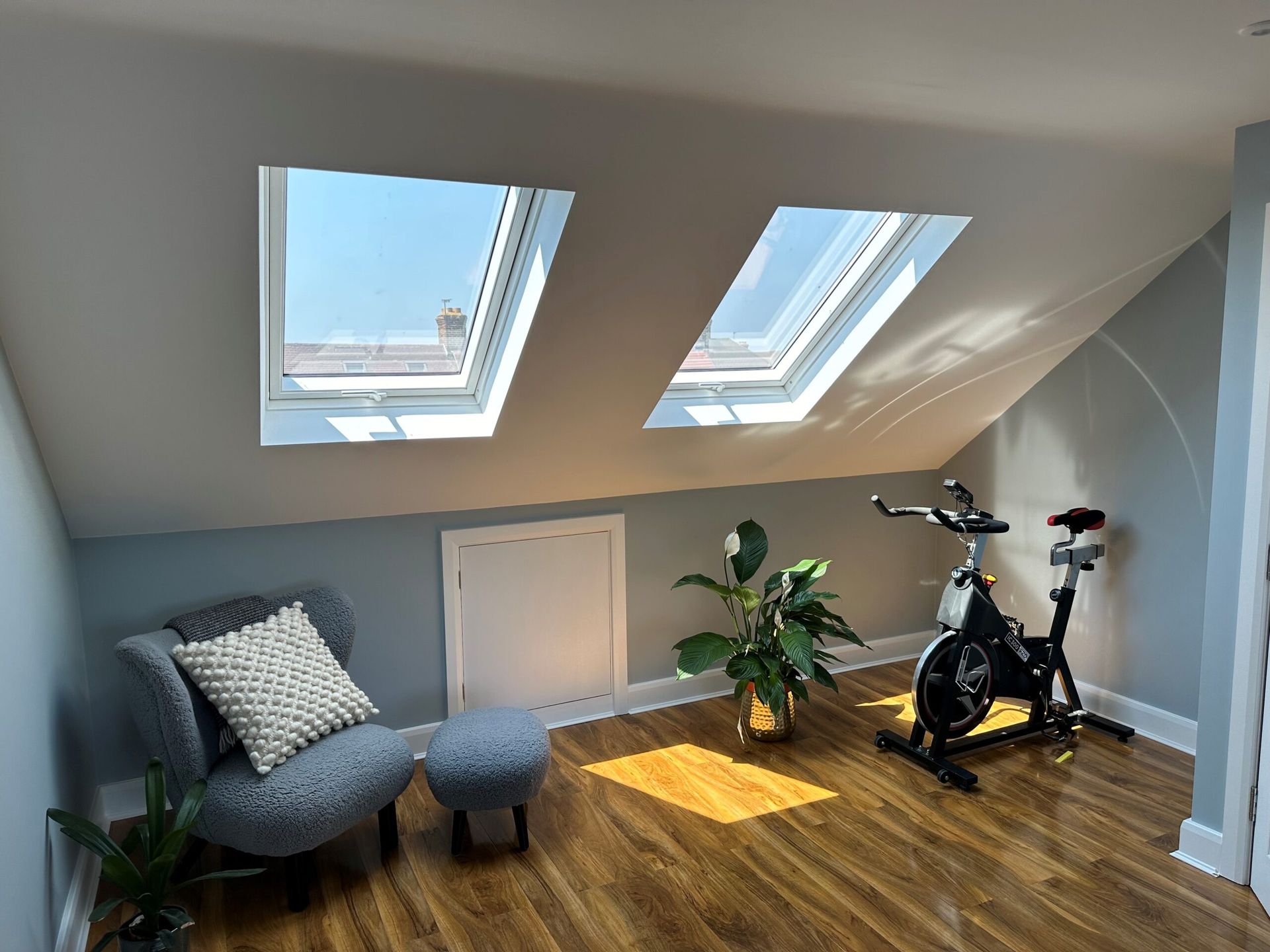
Suffolk loft conversion 1
Suffolk loft conversion for gym and relaxing area by Pro Build East Ltd with sky lights giving natural light
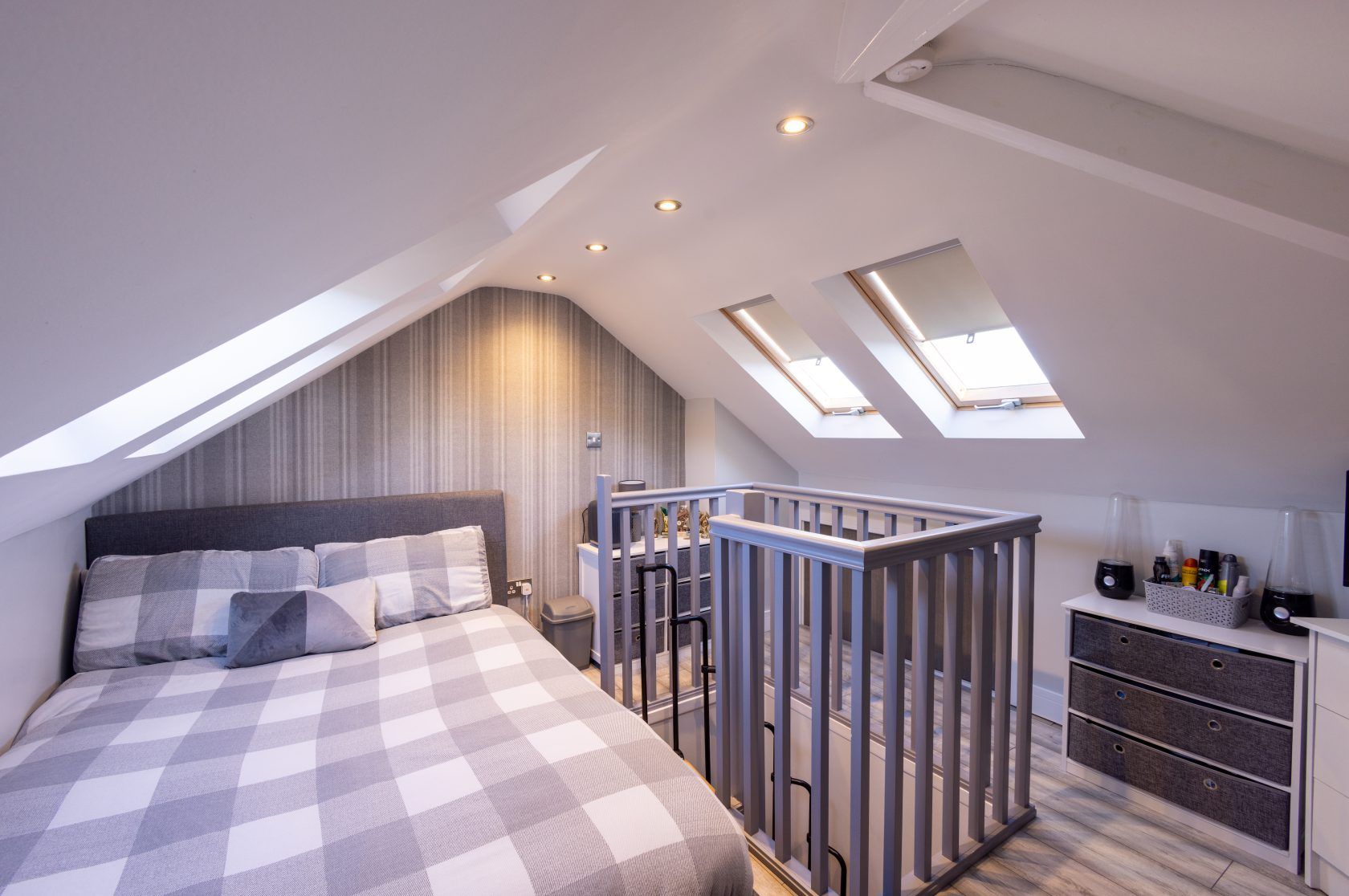
Suffolk loft conversion 2
Best Suffolk loft conversion for luxury bedroom by Pro Build East Ltd with sky lights giving natural light
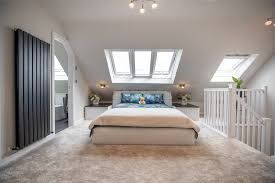
Suffolk loft conversion 3
Best Suffolk loft conversion for luxury bedroom by Pro Build East Ltd with sky lights giving natural light & en suite bathroom
Suffolk loft conversion 4
Suffolk loft conversion for home office and relaxing area by Pro Build East Ltd with natural light
Technical Considerations for Loft Conversions
Is Your Loft Suitable?
An initial assessment should consider:
- Roof height, pitch and construction.
- Usable headroom after installing the new floor and insulation.
- Space for stairs and their effect on the rooms below.
- Existing chimneys, tanks and other obstructions.
- The support needed for the new accommodation.
A generous-looking loft does not automatically make a comfortable room. The space you can stand in, furnish and reach safely matters more than the total floor area.
Structural Modifications
The new floor and any roof alterations need a suitable structural design. Existing ceiling joists should not be assumed capable of supporting a habitable room, and roof members must not simply be cut away to create space.
A structural engineer can assess the proposed changes, calculate loads and specify suitable support. The assessment may also need to consider the existing walls and foundations.
Access and Staircases
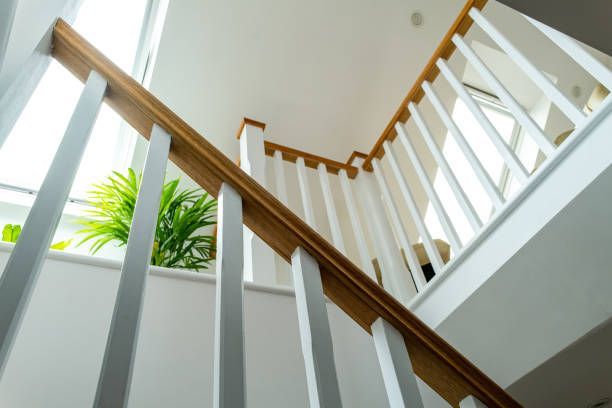
Plan the stairs early: their position can determine whether the conversion works. Access to living accommodation normally requires a permanent, compliant staircase rather than a retractable loft ladder.
The usual staircase headroom is 2 metres. Where space is restricted in a loft conversion, Approved Document K provides for reduced headroom of 1.9 metres at the centre, reducing to 1.8 metres at the side, in the arrangement shown in its guidance. This is separate from assessing the room’s usable ceiling height.
See Approved Document K: stairs and protection from falling.
Fire Safety
Fire safety must be considered throughout the escape route, including the existing house. Depending on the layout, work may include fire-resisting construction, suitable doors and an appropriate alarm system.
Adding a storey to a two-storey house can affect protection of the staircase below. Open-plan layouts need particular attention: a roof window alone should not be assumed to provide an acceptable escape solution.
Read the Planning Portal’s loft-conversion fire-safety guidance.
Insulation and Ventilation
The design needs to address heat loss, moisture and ventilation together. Discuss roof insulation, condensation control, fresh air and bathroom extraction where relevant. Consider summer comfort too, especially when choosing the size and position of rooflights.
Electrical and Plumbing Works
Include lighting, sockets, heating and any bathroom services in the design and quotation. Confirm the electrical certification and other completion documents you will receive, and assess whether existing services can support the proposed additions.
Planning Permission in Suffolk
For homes in Hadleigh, Sudbury and elsewhere within Babergh, Babergh District Council is the local planning authority for household planning applications. Properties outside the district fall under their own local planning authority.
Start with Babergh’s planning guidance, which also links to its mapping service and pre-application advice.
Permitted Development Criteria
For qualifying roof enlargements, key limits include:
- A maximum additional volume of 40 m³ for terraced houses or 50 m³ for other houses, including detached and semi-detached properties.
- Previous roof enlargements count towards the allowance.
- The enlargement must not exceed the existing roof’s highest point.
- It must not project beyond the existing roof slope on the principal elevation where that elevation faces a highway.
- External materials must be similar in appearance to the existing house.
These are key checks, not a complete eligibility checklist. Other conditions cover matters such as windows, eaves and balconies. Rooflights and roof enlargements also fall under different provisions.
A front-facing rooflight is not automatically excluded from permitted development. Under the separate Class C rules, qualifying rooflights must project no more than 150 mm beyond the roof plane and must not rise above the roof’s highest point; other conditions and property restrictions also apply. See the Planning Portal’s rooflight and roof-alteration guidance.
Check the Planning Portal’s roof-enlargement rules and the government’s householder permitted-development guidance against the actual proposal.
When Planning Permission or Other Consent May Be Needed
Planning permission is needed where the proposal does not qualify for permitted development. Rights may also have been removed through a planning condition or Article 4 direction. The householder rights described here do not apply to flats or maisonettes.
Roof enlargements under Class B are not permitted development in conservation areas or other designated areas, including National Landscapes. Internal conversions and rooflights need their own assessment; being in a conservation area does not automatically mean every loft-related alteration needs a planning application.
For a listed building, alterations affecting its special architectural or historic character require listed building consent, separately from any planning permission. See Babergh’s listed-building guidance.
Confirming Permitted Development
Where a proposal qualifies, a Lawful Development Certificate can provide formal confirmation of its planning status. It is separate from Building Regulations approval and can be useful when selling the property.
Building Regulations You Must Comply With
Converting a loft into living accommodation requires Building Regulations approval, whether or not a planning application is needed.
The design and work must address the applicable requirements, including:
- Structural stability.
- Fire safety and escape.
- Stairs, landings and guarding.
- Insulation and energy efficiency.
- Ventilation and moisture control.
- Sound insulation where required.
- Electrical safety and relevant plumbing and drainage requirements.
Agree the approval route and inspection stages before starting. Babergh and Mid Suffolk’s Building Control team can advise on local-authority applications.
Party Walls and Neighbours
Work affecting a shared wall, such as inserting supporting beams, may engage the Party Wall etc. Act 1996. Notice and agreement procedures are separate from planning permission and Building Regulations. Check the
government’s Party Wall guidance early enough to allow for the required process.
Loft Conversion Types Comparison
Different loft styles suit different houses and requirements:
| Conversion type | Best suited to | Space gained | Relative cost* | Planning Permission |
|---|---|---|---|---|
| Rooflight Conversion | Roofs with sufficient existing usable height | Uses existing roof space | Usually lower | May qualify for permitted development; rooflight conditions apply |
| Dormer Conversion | Roofs where extra headroom would improve the layout | More standing room and usable floor area | Usually medium | May qualify for permitted development if all conditions are met |
| Hip-to-Gable conversion | Houses with a sloping hipped roof, including some semis and end terraces | Enlarges the usable roof space | Usually medium–higher | May qualify for permitted development if all conditions are met |
| Mansard conversion | Properties suited to substantial roof remodelling | Can create a substantial additional room or floor | Usually higher | Generally requires planning permission |
* Relative costs are a guide to complexity, not quotations. Size, structure, access, specification and required work elsewhere in the house can change the order.
What Should Your Budget Include?
Ask for a written quotation that identifies design and engineering fees, approvals, scaffolding, structural work, insulation, stairs, electrics and finishes. Check whether bathroom fittings, decoration, floor coverings, waste removal and VAT are included.
Allow a contingency for unforeseen work. Comparing quotations is much easier when each builder is pricing the same drawings and specification.
Ready to Start Your Loft Conversion?
Speak to Pro Build East about your property, the space you want to create and your budget. An initial discussion can help identify the next steps before you commit to a design.
Call 07454 973410 to discuss your loft conversion.
Typical Loft Conversion Process
- Initial assessment: Review the roof, access, existing layout and intended use.
- Design and structural calculations: Establish a practical layout and the support it requires.
- Planning and consent checks: Confirm permitted development or obtain the necessary permissions, with Party Wall procedures where applicable.
- Building control arrangements: Submit the appropriate application and agree inspections before construction.
- Construction and inspections: Carry out the work, arrange required inspections and agree any changes.
- Completion and handover: Address outstanding items and retain the relevant building-control completion documentation and installation certificates.
Ask for a project-specific programme that distinguishes design and approvals from construction. Discuss when the stairs will be installed, how the home will be protected and any periods when rooms or services may be unavailable.
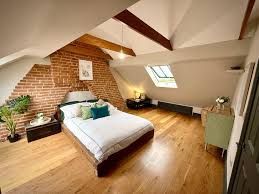
Suffolk loft conversion 5
Best Suffolk loft conversion for luxury bedroom by Pro Build East Ltd with sky lights giving natural light
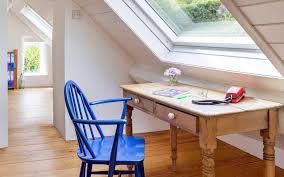
Suffolk loft conversion 6
Best Suffolk loft conversion for luxury social rooms by Pro Build East Ltd with sky lights giving natural light
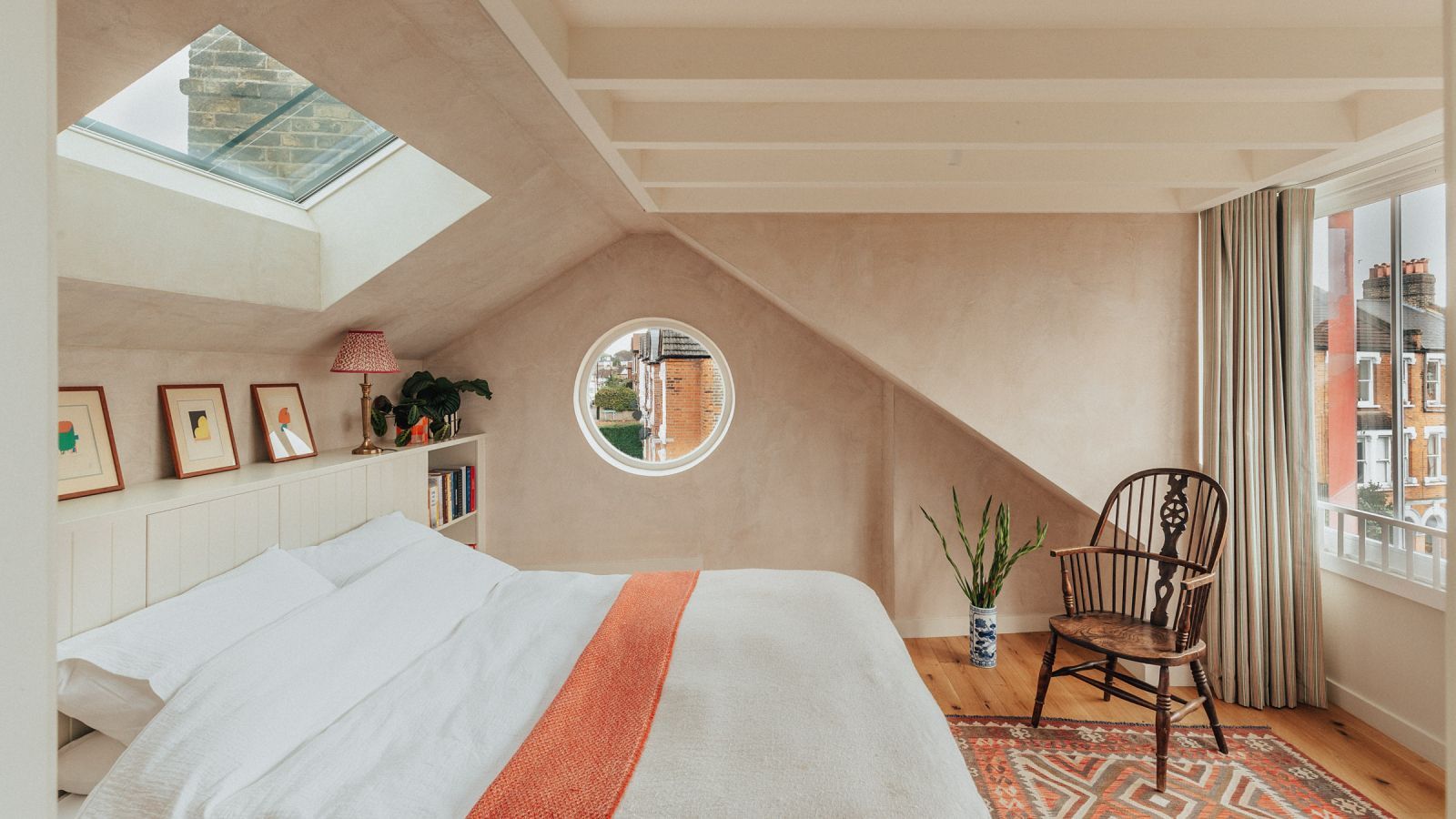
Suffolk loft conversion 7
Best Suffolk loft conversion for luxury bedroom by Pro Build East Ltd with sky lights giving natural light
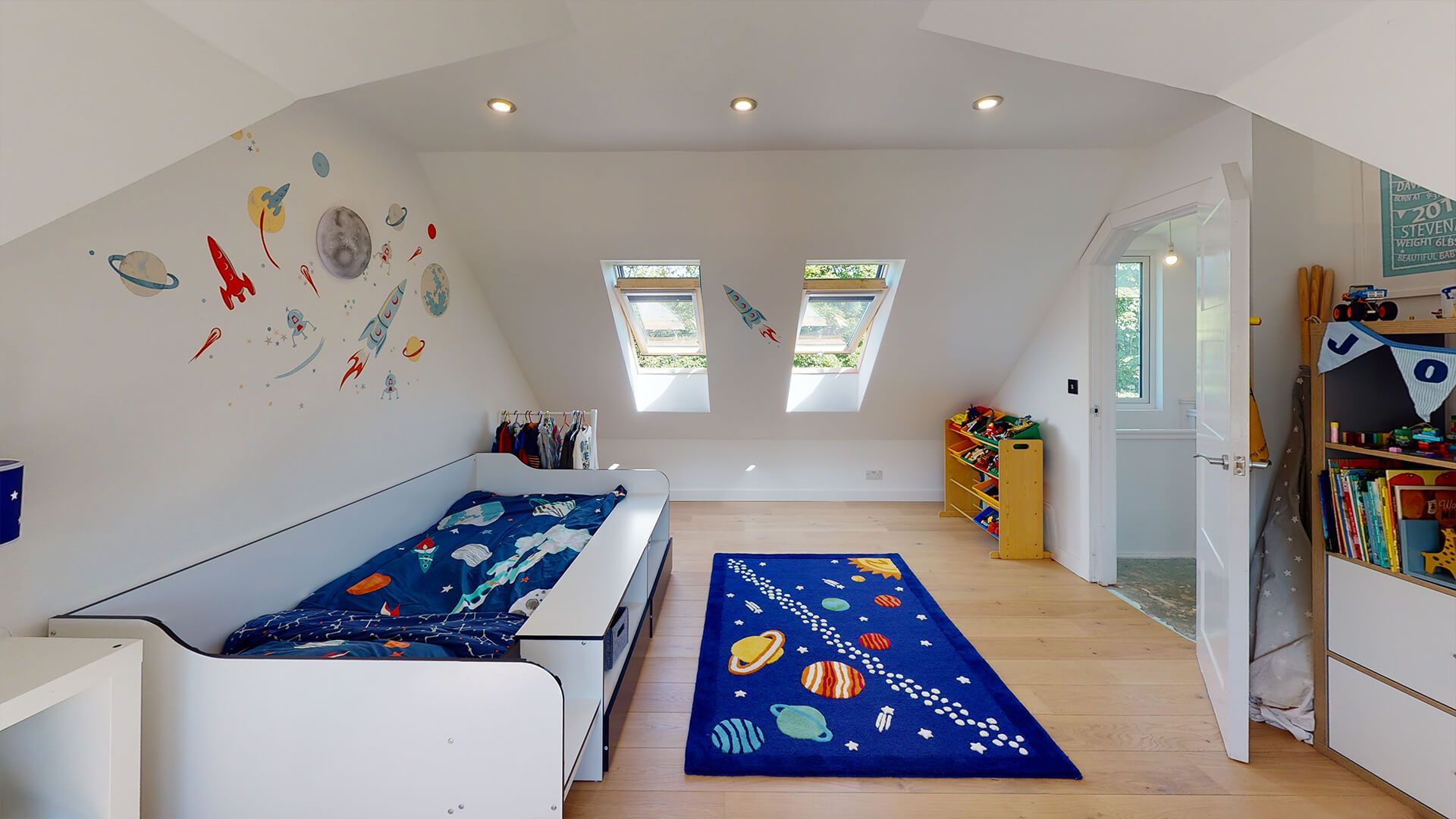
Suffolk loft conversion 8
Modern loft bedroom conversion for child in Suffolk by Pro Build East Ltd
Loft Conversion, Extension or Garage Conversion?
1. Loft Conversion
Worth exploring when you need upstairs accommodation and want to preserve outdoor space. Roof suitability and stair access are central to the decision.
2. Home Extension
An option when the main need is a larger kitchen, living area or ground-floor room. Consider garden space, neighbouring properties and the planning position.
3. Garage Conversions
May suit a home office, playroom or other ground-floor use. Assess the building’s condition, damp protection, insulation and any planning restrictions, including conditions requiring parking space to be retained.
Choose the option that solves the problem in your home, rather than the one that appears cheapest in isolation.
FAQ - Suffolk Loft Conversions
Do I need planning permission for a loft conversion?
It depends on the property and design. Some conversions qualify for permitted development; others require an application.
Check the planning history, location and proposed alterations with the relevant local planning authority. Building Regulations approval is a separate requirement for living accommodation.
Bottom line:
Most standard loft conversions in Suffolk (or anywhere in the UK) do not require planning permission, but you always need Building Regulations approval. If in doubt, check with your local council or a professional builder like Pro Build East Ltd.
What are common mistakes to avoid when doing a loft conversion?
Common mistakes include:
- Designing the room before considering the stairs, overlooking work needed downstairs, comparing incomplete quotations and assuming permission is unnecessary. Agree the layout, approvals, specification and responsibilities before construction begins.
✅ Tip: Use an experienced builder, like Pro Build East Ltd, to avoid these pitfalls and ensure a safe, high-quality loft conversion.
Do I need a structural survey?
The proposal needs a suitable structural assessment and design.
Your designer or engineer should identify the investigations and calculations required.
A general survey alone does not replace the design work or building-control process.
Can We Stay at Home During the Work?
This may be possible, but depends on the scope, layout and safe separation of the work.
Discuss noise, dust, security, bathroom access and service interruptions with your builder before deciding.
How do I find a trusted builder in Suffolk?
Look for local, experienced builders like Pro Build East Ltd, with experience in loft conversions, excellent reviews, and full insurance.
Ask about comparable projects, references, insurance and who will manage the work.
Request a clear written scope, payment schedule and arrangements for variations.
Establish who is responsible for design, applications, inspections and completion documents.
Ready to Transform Your Suffolk Home?
If you are considering a loft conversion in Hadleigh, Sudbury, Ipswich or a surrounding village, Pro Build East Ltd can discuss your ideas and help you understand what the project would involve.
Start with the space you need, the home you have and a realistic budget.
Get a free consultation today:
📞 Call: 07454 973410
📩 Email: info@probuildeastltd.co.uk
Local Scope and Information Date
Information checked against the linked official guidance and current as of 25 September 2026. This guide explains the rules for England, with local references specific to Hadleigh, Sudbury and other properties within Babergh district, Suffolk.
Babergh District Council is the local planning authority for household planning applications in this area.
Suffolk County Council has wider county-level and strategic responsibilities; its own planning decisions cover minerals, waste and county-council development, rather than ordinary household loft conversions. See Suffolk County Council’s explanation of its planning remit.
For properties elsewhere in Suffolk, including Ipswich, use the relevant local planning authority. Rules, guidance and council arrangements can change, and individual properties may have additional restrictions.
Confirm the requirements for your address and design with the relevant planning authority, building-control provider and project professionals before work begins.
Pro Build East Ltd Builders Blog